
Evangeline Parish Criminal Case Files
A criminal court record is the official court file for a prosecution. In Evangeline Parish, felony criminal matters and many serious criminal case events route through the 13th Judicial District Court, with the Evangeline Parish Clerk of Court serving as the local court record custodian. The file can show the formal charge, the plea, docket activity, bond entries, motions, continuances, court orders, disposition, sentencing, probation violation activity, and appeal-related filings.
Lower courts can also matter. Ville Platte City Court and Mamou Municipal Court may handle local traffic, ordinance, and misdemeanor matters within their jurisdiction. Justice of the peace or mayor's court records may appear for local orders or warrants where applicable. A criminal record search should therefore start with the court named on the summons, citation, bond paper, warrant, or notice.
The full court case is separate from the arrest-to-charge path. For booking charges, report copies, and the transition from arrest to filed charge, use the Evangeline Parish arrest records and court charges material. For civil, family, succession, and traffic files, the broader Evangeline Parish court records page gives the all-records search route.
Search Evangeline Parish Criminal Records
The Clerk of Court's public records search is the main online route for district court files. The official clerk site links to COTT eSearch, a subscription-based portal. The public login page shows a User ID field, a case-sensitive Password field, Password Reminder, Create an Account, and Good Thru Dates. It does not expose the full search form before login, so detailed search fields should not be assumed without account access.
- Confirm the court from the notice, warrant, summons, citation, or bond paperwork.
- For district court criminal records, open the Clerk of Court public records search through COTT eSearch.
- Check Good Thru Dates before searching so recent or older criminal case coverage is not misread.
- Review docket entries for filed charges, plea events, motions, bond entries, disposition, and sentencing.
- Request certified copies from the Clerk of Court if an official copy is needed for court, licensing, or another formal use.
The Clerk of Court is the custodian for the district court file, but the Sheriff's Office can hold related law-enforcement records. Sheriff arrest or summons reports, jail roster entries, and crash reports are not the same as criminal court records. A roster charge may be an allegation at booking, while the court record shows what was actually filed and how the charge ended.
Evangeline Parish Criminal Case Flow
Criminal docket events show movement from accusation to outcome. The order may vary by case, but the court record usually shows the formal charge, first appearances or arraignment activity, pretrial filings, plea or trial events, disposition, and sentencing when a conviction occurs. Warrants, bond changes, continuances, probation violations, and returns can also appear in the same file.
Case flow: Charges Filed › Arraignment › Pretrial Motions › Plea or Trial › Disposition › Sentencing
| Stage | What Happens |
|---|---|
| Charges filed | The prosecution enters a formal charge in court, usually after review by the district attorney or other prosecutor. |
| Arraignment | The defendant is brought before the court for plea entry, such as guilty or not guilty. |
| Pretrial motions | The parties ask the judge for rulings on evidence, discovery, bond, continuances, or case procedure. |
| Plea or trial | The case may resolve by plea, trial verdict, dismissal, or another disposition. |
| Sentencing | If there is a conviction, the court enters the punishment, probation terms, fines, or other sentence details. |
Evangeline Parish Criminal Record Fields
Criminal court records can be read field by field. A single case may contain several charges, and each charge can have its own status or outcome. That is why a disposition must be tied to the exact count or charge. A docket that says one charge was dismissed does not mean every charge in the case was dismissed, and a guilty plea to one count may leave another count reduced, amended, or not prosecuted.
| Field | What It Shows |
|---|---|
| Case number | The court's case identifier if available; the public research did not verify a local format outside login. |
| Defendant | The person charged in the criminal case. |
| Court | The 13th Judicial District Court or a lower court such as Ville Platte City Court or Mamou Municipal Court. |
| Filed charge | The charge as filed in court, which may differ from a booking or arrest label. |
| Plea | The defendant's formal answer, such as guilty, not guilty, or another court-accepted plea. |
| Docket events | Hearings, motions, notices, orders, continuances, warrants, bond entries, and returns. |
| Disposition | The outcome of a charge or case, such as guilty, dismissed, acquitted, or otherwise resolved. |
| Sentence | Jail, prison, probation, fines, costs, restitution, or other terms when a conviction is entered. |
Charges and Convictions Compared
A charge is an accusation filed or tracked in the criminal process. A conviction is a final result after a guilty plea, guilty verdict, or other adjudication that establishes guilt. Evangeline Parish criminal court records can show both, but they should not be read as the same thing. Booking charges, filed charges, amended charges, dismissed counts, plea counts, and sentencing entries can all appear in related records.
| Point | Charge | Conviction |
|---|---|---|
| Meaning | An accusation or filed count. | A finding or plea that establishes guilt. |
| Timing | Appears before final outcome. | Appears after plea or verdict. |
| Record value | Shows what was alleged or filed. | Shows the count that ended in guilt. |
| Common error | Treating every arrest or filed charge as proof of guilt. | Ignoring dismissed or amended counts that changed the case history. |
Note: A criminal court record should be read count by count because one case can have several different outcomes.
Evangeline Parish Criminal Access Rules
Louisiana public-records law supports access to public records held by the proper custodian, but criminal court access is not unlimited. Ordinary adult criminal case files may be public, while juvenile matters, sealed records, expunged records, protected identifiers, adoption-related material, and some mental-health or medical information can be withheld or redacted. The local custodian still controls production and certification.
Louisiana Code of Criminal Procedure article 971 explains the public-access effect of criminal expungement.
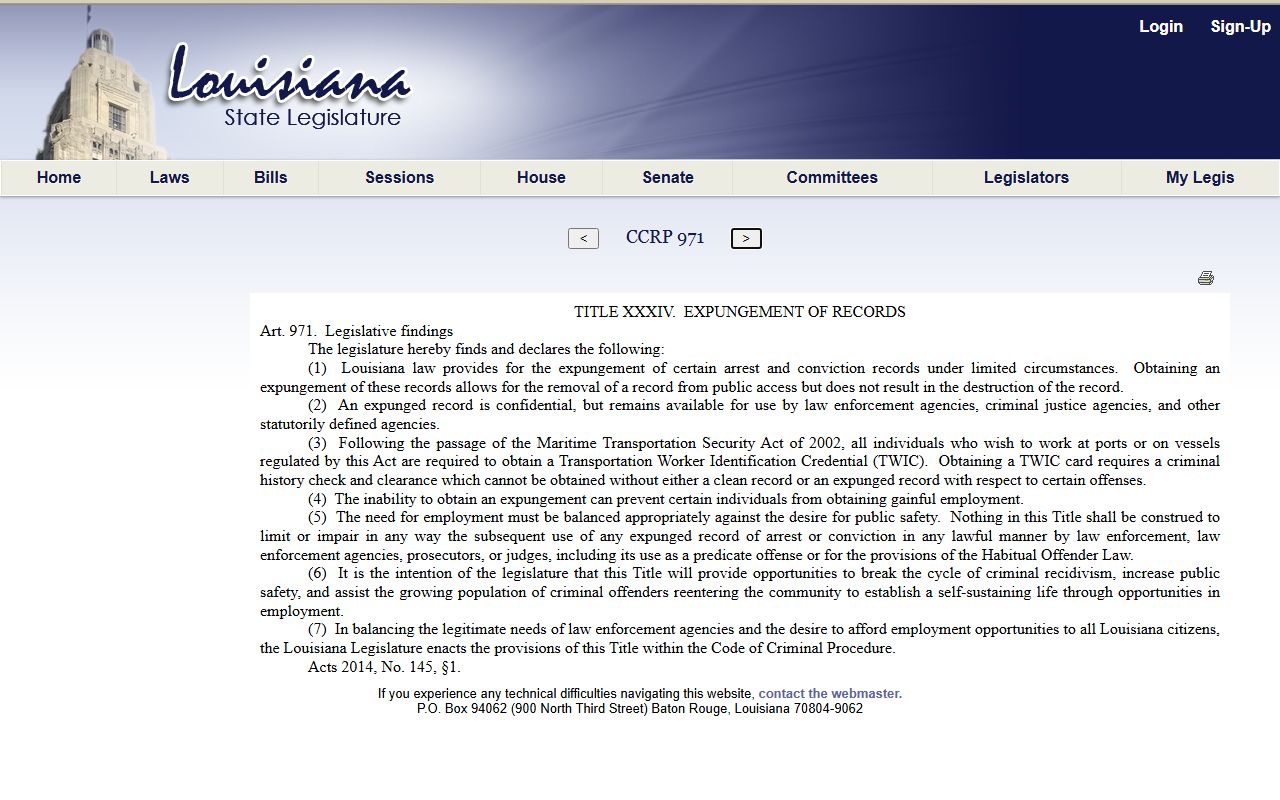
That rule is central to criminal record searches because expungement removes eligible records from public access without destroying the record.
Louisiana Code of Criminal Procedure article 978 is the felony expungement eligibility source identified in the research.
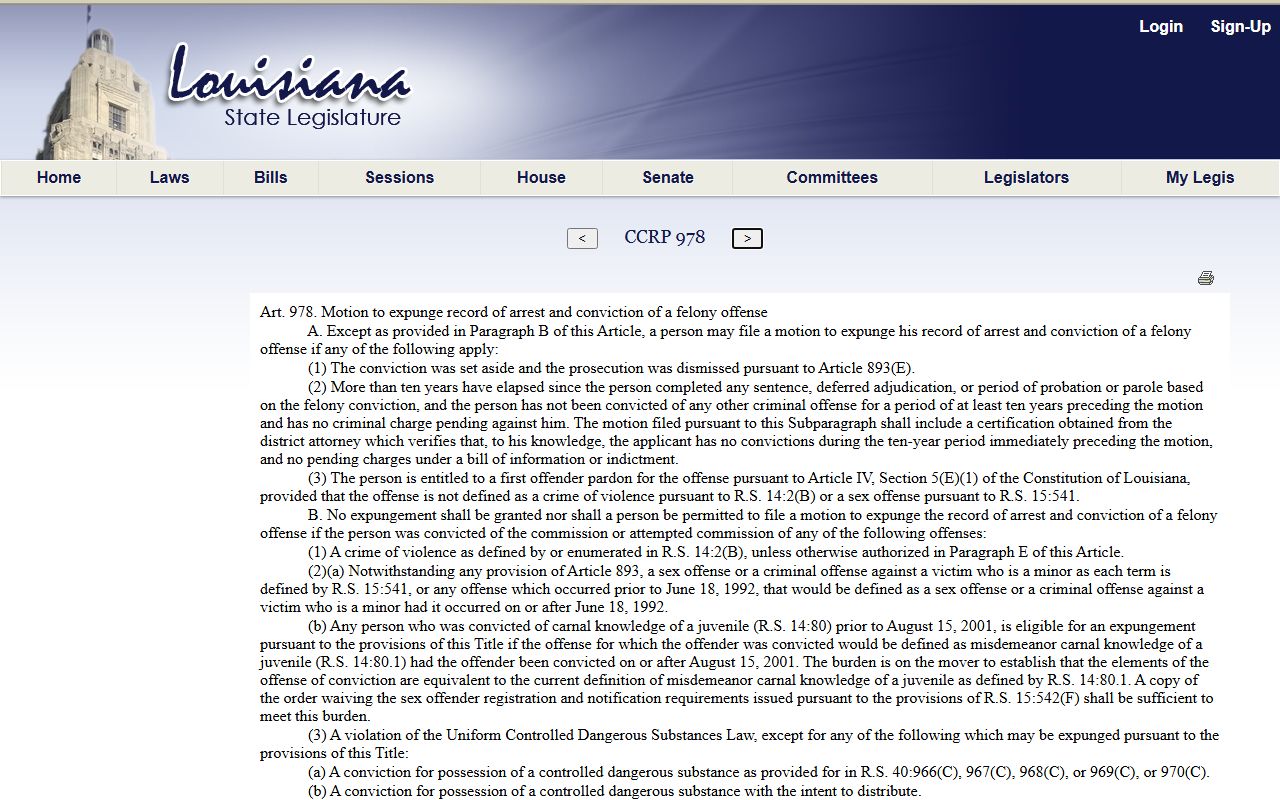
Eligibility rules matter before any fee is paid because some violent, sex, or other excluded offenses may not qualify.
Sealed and Expunged Criminal Records
Sealing and expungement both limit public access, but they are not identical. A sealed record is hidden from ordinary public inspection by law or court order. An expunged Louisiana criminal record is removed from public access, but the research source is clear that it is not destroyed. Law enforcement, criminal justice agencies, and other agencies named by law may still have access.
| Point | Sealed | Expunged |
|---|---|---|
| Public visibility | Hidden from ordinary public inspection. | Removed from public access. |
| Record status | Still exists under restricted access. | Not destroyed under Louisiana article 971. |
| Access path | Usually requires legal authority or a court order. | May remain available to law enforcement and agencies named by statute. |
| Cost note | Cost depends on the filing or order sought. | Article 983 says total expungement cost generally cannot exceed $550 unless an exception applies. |
Louisiana Code of Criminal Procedure article 983 is the expungement cost source documented for Evangeline Parish criminal court records research.
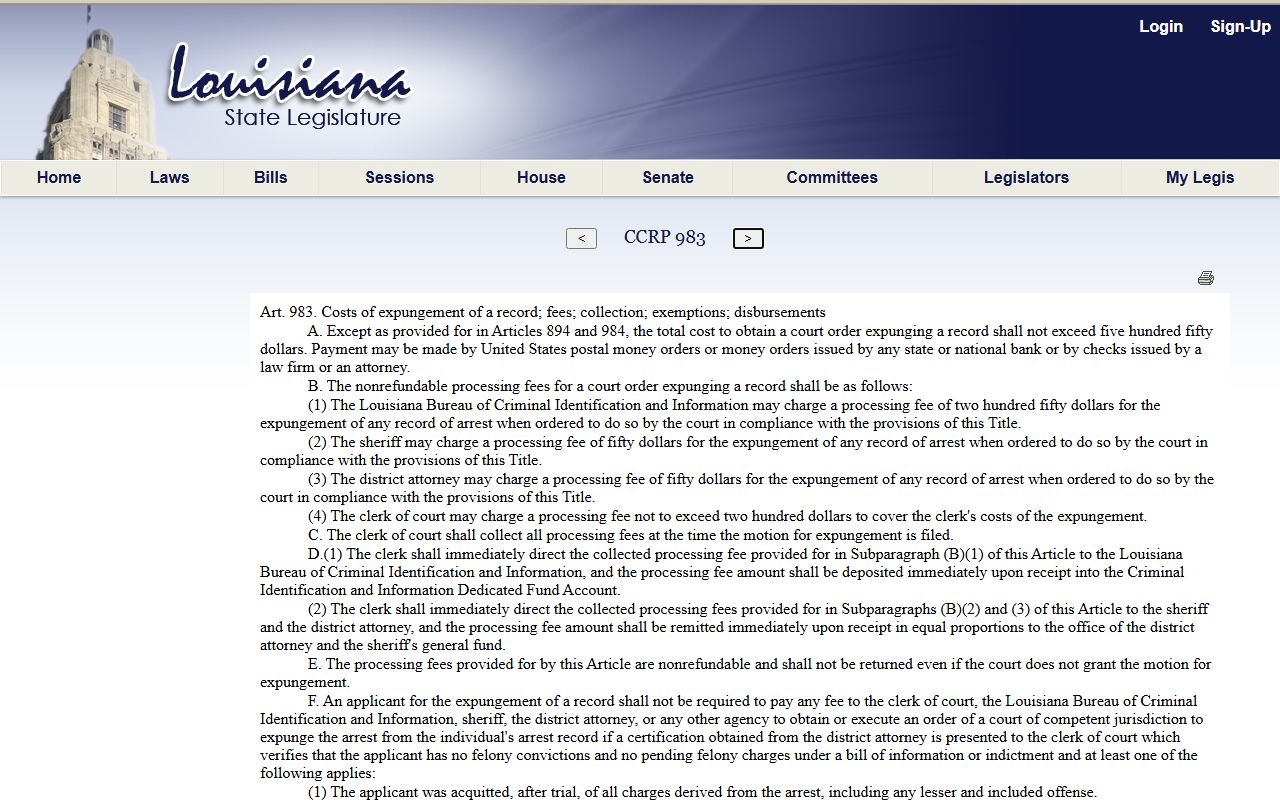
The fee ceiling is helpful, but users still need to verify current clerk filing requirements and statutory exceptions before filing.
Evangeline Parish Criminal Court Offices
The district attorney's role is different from the clerk's role. The prosecutor decides whether arrest charges become formal filed charges and handles the prosecution once a case is in court. The Clerk of Court keeps the filed court record and copy channel. The public defender office may represent eligible defendants, but it is not the public custodian for criminal court files.
The Louisiana District Attorneys Association prosecutor directory identifies the Evangeline Parish district attorney contact used in the research.
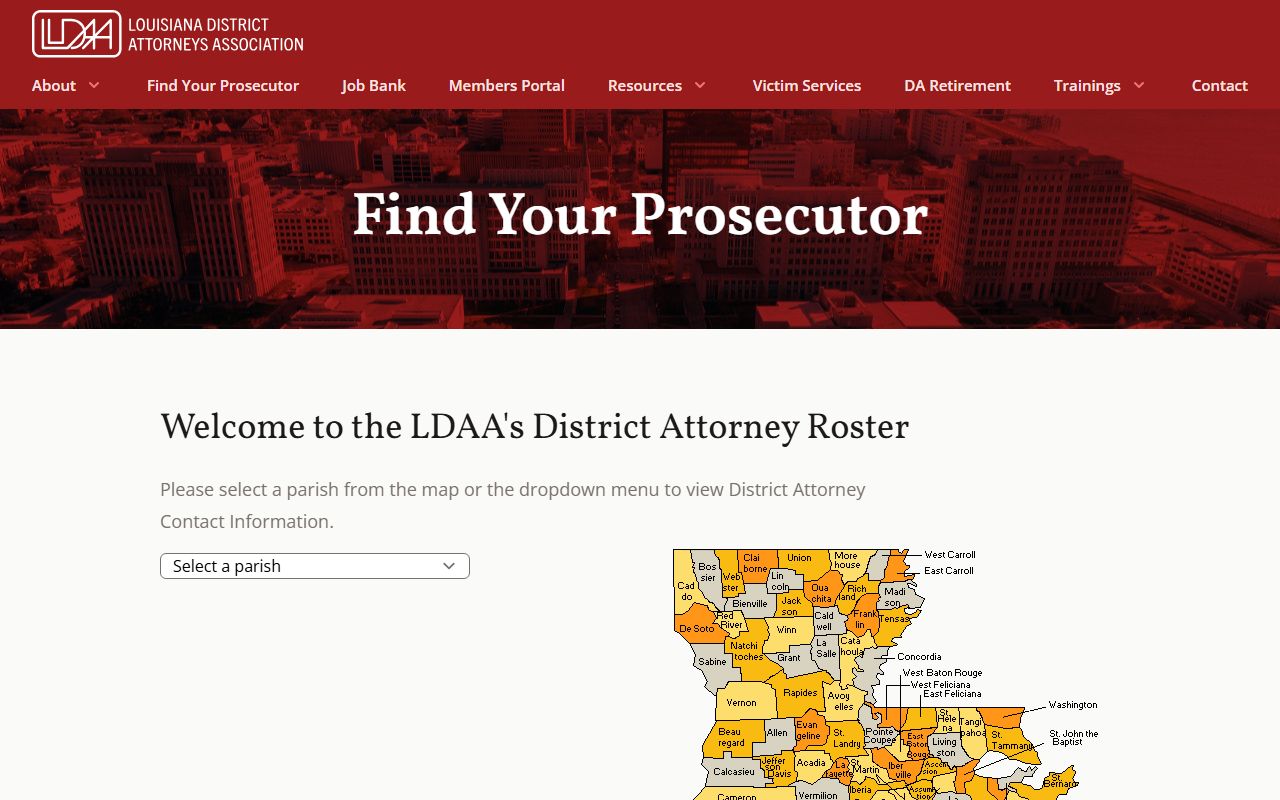
That source supports the distinction between arrest or booking charges and the formal charge decisions that become part of the court file.
The Louisiana Office of State Public Defender is the state-level public defense source identified in the research.

Public defense information helps explain the criminal court ecosystem, but it does not replace the clerk's records request process.
The OSPD District 13 page lists the district public defender office serving Evangeline Parish.
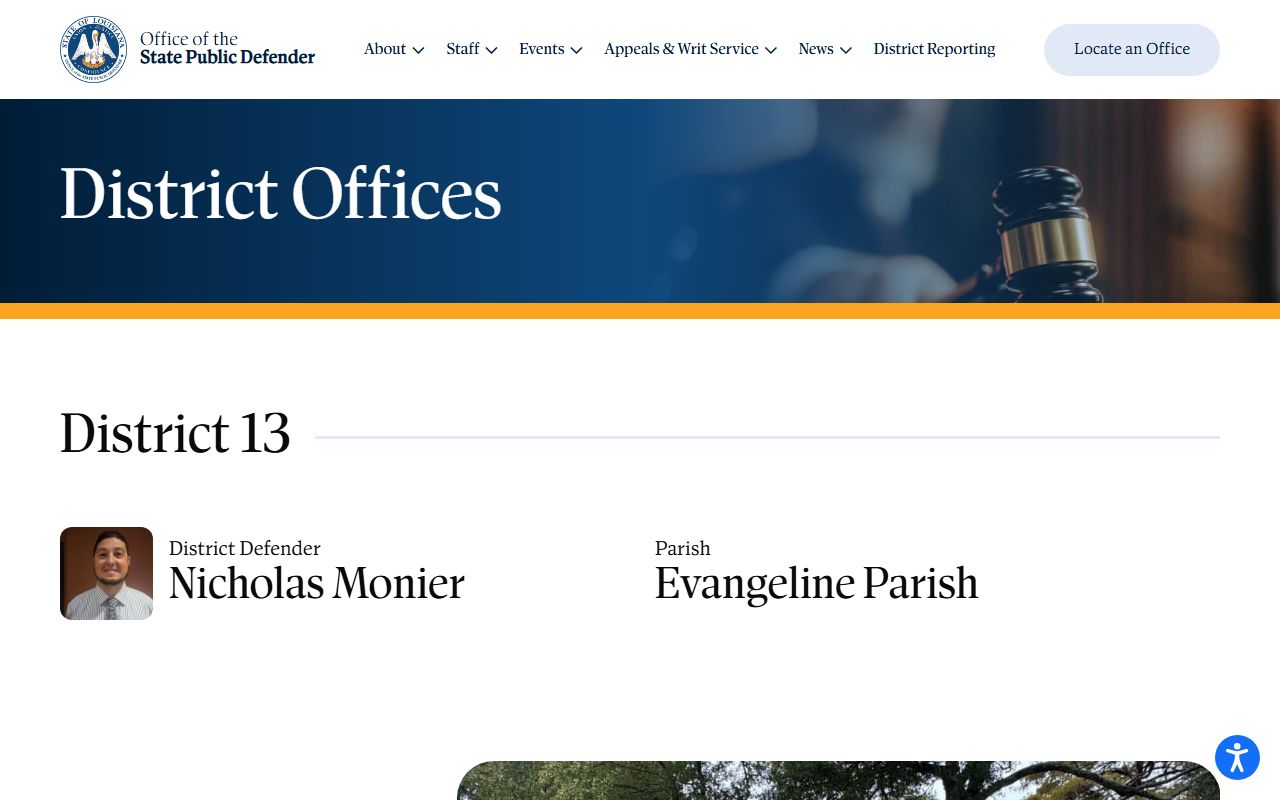
That local defense source may help defendants find representation, while the Clerk of Court remains the contact for court-file copies.
Restricted Evangeline Parish Criminal Records
Juvenile records are the clearest restricted category in the research. Louisiana Children's Code article 412 treats juvenile records and reports as confidential except where access is authorized, with traffic violations treated differently. District and juvenile court rules reinforce that juvenile records remain confidential unless access is allowed for good cause or by law.
Adult criminal records can also be restricted. Sealed cases, expunged records, protected victim data, Social Security numbers, medical information, and confidential personal identifiers should not be exposed through ordinary public search. If a criminal case appears incomplete online, the missing part may be restricted, not yet indexed, held by a different court, or available only by direct clerk request.